Imagine a workplace where tasks coordinate themselves, decisions happen faster, and operations run smoothly without constant supervision across enterprise operations.
Today’s businesses are moving beyond traditional workflows toward intelligent agentic orchestration powered by multi-agent AI systems. These systems streamline processes, improve efficiency, and enable autonomous decision-making systems across large-scale systems. From enhancing customer experiences to driving business decision intelligence, enterprise AI orchestration is reshaping how organizations operate in regulated and complex environments.
In this blog, we explore how agentic AI orchestration works, how it has evolved, and how enterprises can adopt it to stay competitive in an AI-first future.
“The future of enterprise AI is not smarter models, but smarter coordination between autonomous agents.”
How Is AI Orchestration Evolving in Modern Enterprise Systems?
The evolution toward enterprise AI orchestration has occurred in distinct stages, each advancing automation, autonomy, and scalability.
1. Traditional ML and Deep Learning: The Building Blocks
Early machine learning models—like linear regression and Support Vector Machines (SVMs)—handled single tasks with narrow goals. They worked well for things like predicting trends or segmenting customers but needed heavy human oversight. Deep learning introduced neural networks that could analyze unstructured data, such as text, images, and audio. Yet these models still worked as stand-alone tools and often needed retraining by experts.
2. Robotic Process Automation (RPA): Structured Workflows
RPA automated repetitive and structured tasks, such as data entry or transaction processing.
It was fast and reliable but struggled with unstructured workflows or situations that required judgment and coordination between processes.
3. AI Agents: Autonomous Components
AI agents closed some of these gaps. They could work on their own, learn from data, and adapt to new situations with less human help. By using past interactions, these agents improved their performance over time. They made complex decision-making easier—but often still worked alone.
4. Orchestrated AI Agent Systems: The Coordinated Future
Now we’re seeing AI agents work together in coordinated systems. These orchestrated networks use a central layer to break down big tasks, assign resources, and enable dynamic teamwork between agents with different skills. The result is an AI ecosystem that delivers more value than any single agent could achieve alone.
How are orchestrated AI systems different from earlier AI approaches?
Orchestrated AI systems enable coordinated autonomy across multiple agents rather than isolated task execution.
How Do Orchestrated AI Agent Systems Work?
The Orchestration Layer
At the heart of advanced AI systems lies the orchestration layer, which functions as the conductor of an AI orchestra:
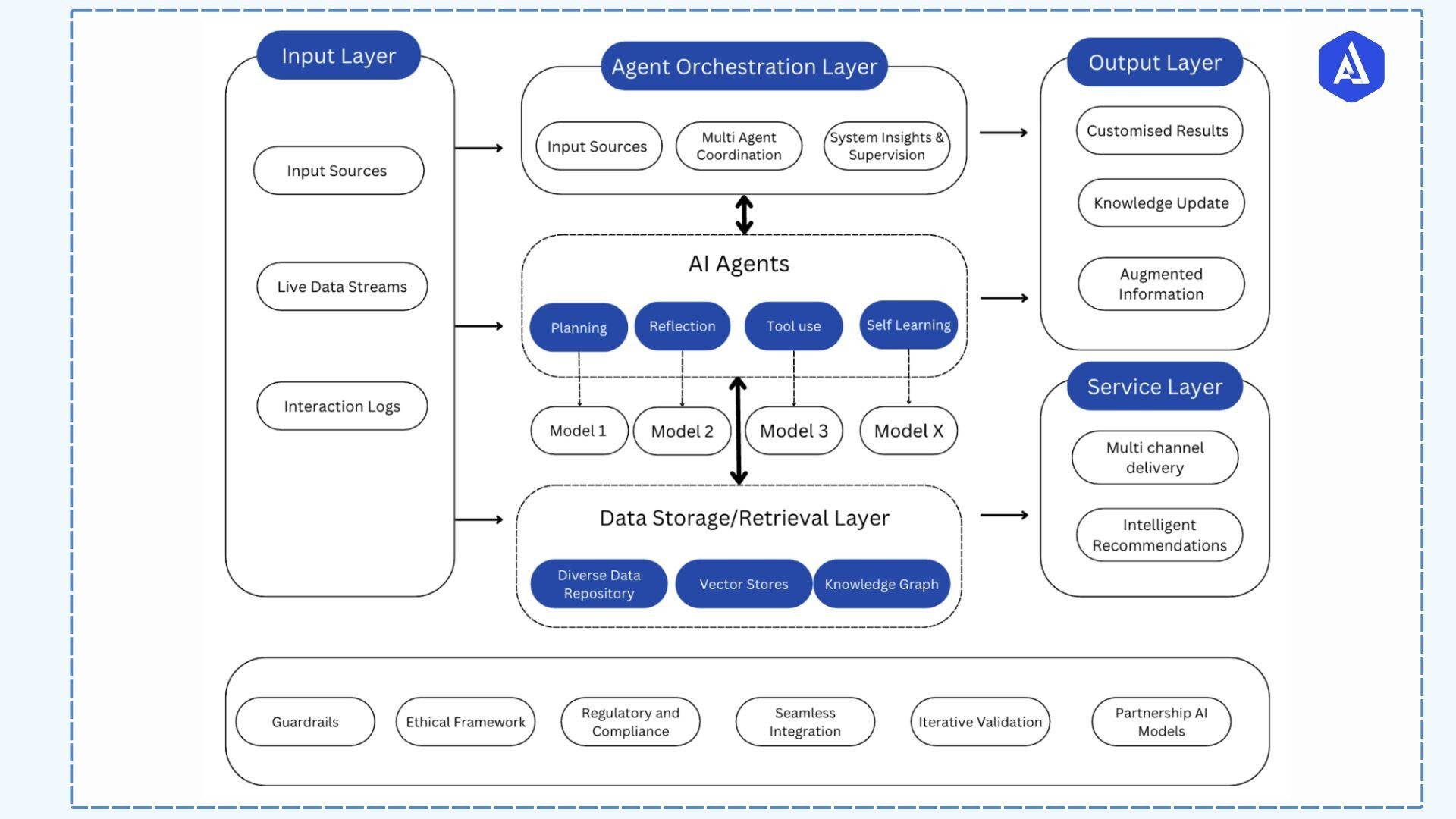 Fig 1: Architecture Diagram of Agentic Orchestration
Key Functions of the Orchestration Layer
-
Task Decomposition and Delegation
The orchestration layer breaks complex jobs into smaller, manageable tasks. It assigns each task to the most suitable agent based on skills and current workload.
-
Resource Management
It manages computing resources across the network of agents, ensuring smooth performance even when workloads change.
-
Communication Protocols
The orchestrator sets clear communication rules. This allows agents to share data, ask for help, and coordinate actions in real time.
-
Conflict Resolution
When agents give conflicting advice or data, the orchestrator uses decision rules to choose the best course of action.
-
Performance Monitoring
It tracks how each agent and the whole system are performing. This feedback loop helps make ongoing adjustments to boost efficiency and results.
Can orchestrated AI systems adapt in real time?
Yes, orchestrated AI systems dynamically reassign tasks and resources in real time based on changing data and conditions.
The Role of Large Language Models (LLMs)
Large Language Models (LLMs) like GPT-4 act as powerful components in orchestrated AI systems. They enhance capabilities in several key areas:
-
Natural Language Processing (NLP) - LLMs enable smooth, human-like communication within the agent network.
They allow users to interact naturally with the system while helping agents understand and respond accurately to language-based queries.
-
Knowledge Integration - They can extract, process, and combine large volumes of unstructured text from different sources.
This gives AI agents deeper insights and helps them make more informed, context-aware decisions.
-
Continuous Learning - LLMs adapt in real time as new information becomes available.
This keeps the system current, improves decision-making, and reduces the need for frequent manual retraining.
-
Task Flexibility - They handle a wide range of language-driven tasks—from drafting reports and summarizing data to mediating discussions between AI agents.
This adaptability makes them a central part of multi-agent coordination and decision support.
How are orchestrated AI systems different from earlier AI approaches?
Orchestrated AI systems enable coordinated autonomy across multiple agents rather than isolated task execution.
How Do Orchestrated AI Agent Systems Improve Decision-Making?
Coordinating multiple AI agents through an orchestration layer can transform how organizations make decisions.
-
Enhanced Data Analysis
Specialized agents can process massive datasets at high speed and accuracy.
The orchestration layer brings these insights together into clear, actionable intelligence that supports faster and better decisions.
-
Real-Time Collaborative Decision-Making
Different agents can work in parallel—some monitoring live data, others spotting patterns, and others creating recommendations.
The orchestrator synchronizes these efforts, delivering timely and complete decision support.
-
Reduced Systemic Bias
Orchestrated systems can combine agents with different models and training data.
By comparing their outputs, the orchestration layer helps detect and reduce bias, ensuring decisions reflect multiple perspectives.
-
Improved Predictive Capabilities
Multiple forecasting agents can each focus on specific parts of a problem.
The orchestration layer merges their predictions to produce stronger, more accurate forecasts than any single agent could achieve alone.
Orchestrating Multi-Agent Systems: Beyond Traditional AI
Intelligent agentic orchestration represents a shift from isolated models to coordinated multi-agent AI systems that reason independently, share context, and execute decisions across interconnected enterprise workflows:
|
Aspect |
Traditional AI |
Orchestrated AI Systems |
|
Autonomy |
Limited autonomy with predefined rules and algorithms |
Coordinated autonomy where individual agents make decisions within an orchestrated framework |
|
Task Handling |
Single, well-defined tasks |
Coordinated handling of complex, interconnected tasks distributed across specialized agents |
|
Adaptability |
Limited flexibility requiring manual retraining |
System-wide adaptability through agent specialization and orchestrated learning |
|
Interaction |
Reactive responses to specific inputs |
Proactive, coordinated engagement across multiple interaction points |
|
Collaboration |
Isolated functioning |
Orchestrated collaboration between specialized agents to solve complex problems |
|
Scalability |
Manual scaling requiring significant infrastructure changes |
Dynamic scaling through the addition or modification of agents within the orchestration framework |
Successful Implementations of Orchestrated AI Agent Systems
Financial Services
-
Risk Management: Banks leverage intelligent agents for fraud detection, credit risk analysis, and compliance monitoring, with an orchestration layer ensuring seamless coordination. This improves accuracy, reduces false positives, and enhances real-time decision-making.
Healthcare
-
Personalized Treatment and Drug Discovery: Orchestrated systems analyze patient data, predict diseases, and optimize treatment plans, improving personalized care. In drug discovery, specialized agents collaborate to accelerate research and lower development costs.
E-commerce
-
Dynamic Pricing and Customer Experience: Automated pricing models, recommendation engines, and chatbots personalize user experiences. The orchestrated approach boosts conversion rates, increases revenue, and enhances customer satisfaction.
Manufacturing
-
Predictive Maintenance: Sensor-driven analysis predicts equipment failures and schedules maintenance in advance. This minimizes downtime, reduces operational costs, and maximizes production efficiency.
Supply Chain Management
-
Autonomous Optimization: Smart agents manage inventory, forecast demand, and optimize logistics in real time. The result is improved supply chain efficiency, fewer delays, and cost savings.
-
Which enterprises benefit most from agentic orchestration?
Organizations operating large, complex, or regulated systems benefit the most. Industries such as finance, healthcare, manufacturing, telecom, logistics, and e-commerce benefit most from agentic orchestration.
What are the Challenges in Agentic AI Orchestration?
The rise of interconnected AI agents brings new challenges in data privacy and security. As these systems share and process large volumes of sensitive information, traditional security measures are no longer enough.
Organizations need multi-layered security architectures that go beyond perimeter defenses. This includes using advanced encryption, dynamic access controls, and intelligent data anonymization methods.
These safeguards must adapt in real time to new and evolving threats, ensuring that sensitive data remains protected as orchestration systems scale.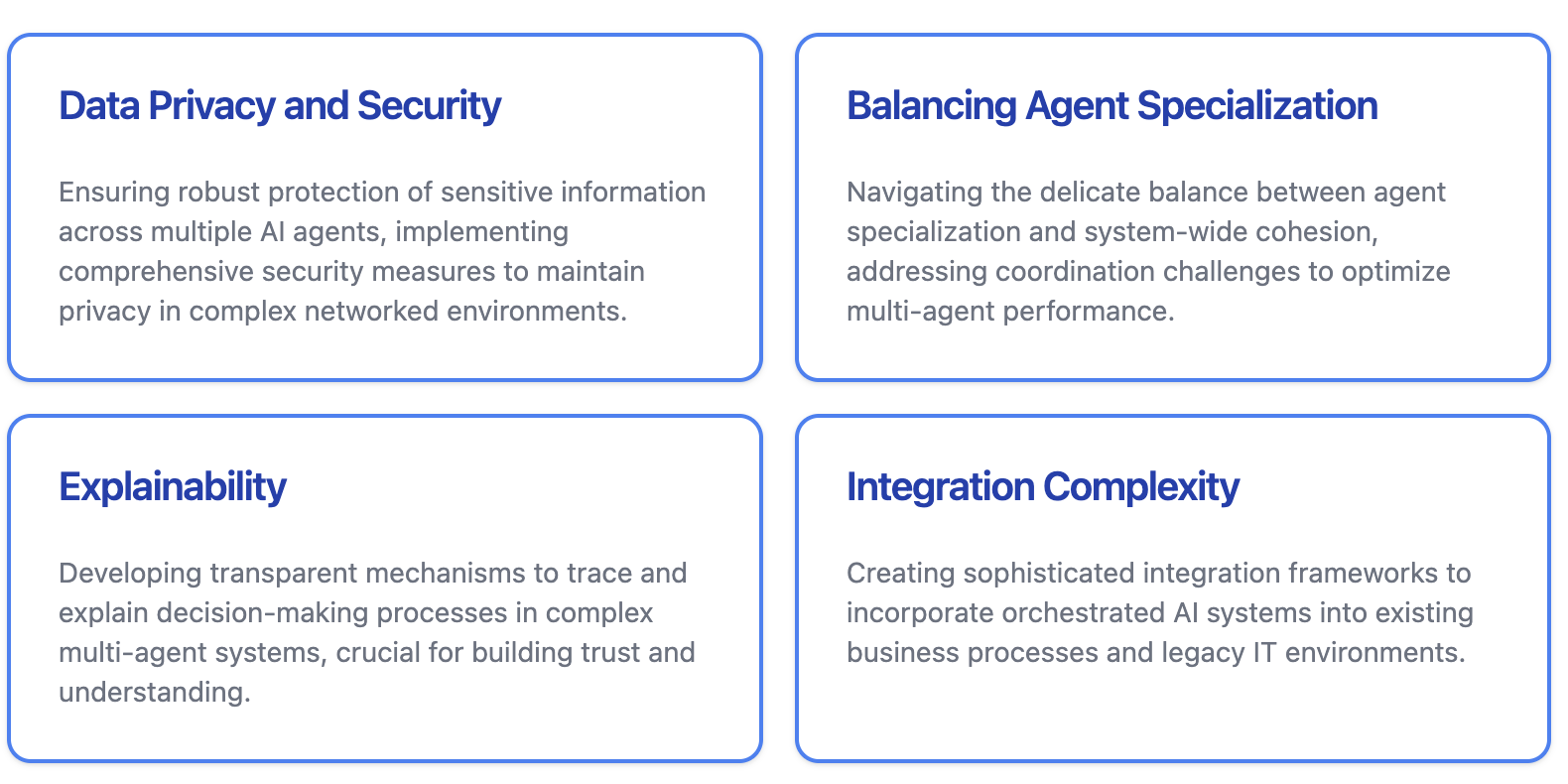
Final Thoughts on Agentic Orchestration
The transition from isolated AI models to intelligent agentic orchestration marks a fundamental shift in enterprise automation. By enabling multi-agent AI systems to collaborate through governed orchestration layers, organizations unlock scalable, adaptive, and reliable autonomous decision-making systems.
As adoption grows across enterprise operations and regulated industries, enterprise AI orchestration will become central to driving efficiency, resilience, and intelligent business outcomes in large-scale systems.